 On
 (1,243 reviews) – Ask About Our Financing Options

Choosing a Chatsworth heating and cooling system is a big decision. It can affect how comfortable your home feels, as well as your home’s value and utility costs. We’ll explore the pros and cons of heat pumps versus furnaces for Chatsworth’s climate to help you choose the best HVAC system for your Central Valley home.
How Heat Pumps and Furnaces Work Differently
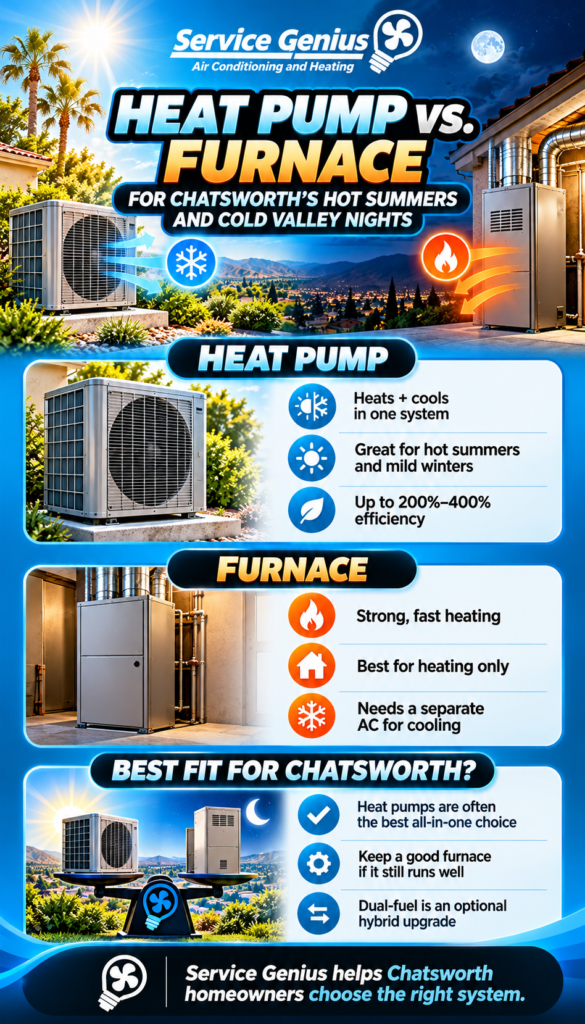
There are several major differences between heat pumps and furnaces. Heat pumps transfer heat energy, which allows them to warm your home in winter and cool it in summer. Modern furnaces use a fuel source or electricity to generate heat, and they’re single-function systems that warm your home in winter but cannot provide cooling.
Why Chatsworth’s Climate Changes the Heat Pump vs. Furnace Decision
Chatsworth, CA’s hot, dry summers and mild winters make it the ideal climate for a heat pump. A heat pump can meet your cooling needs in summer and provide dependable heating in winter. Since Chatsworth winters rarely drop below 40°F, a heat pump can continue to run efficiently year-round.
Can a Heat Pump Handle Chatsworth’s Hottest Summer Days?
Yes, modern heat pumps for hot Los Angeles climates can effectively handle Chatsworth’s hottest temperatures. Summer highs typically hover around 90°F, but heat waves in the valley can sometimes push temperatures above 100°F. Fortunately, most heat pumps can comfortably cool your home even when air temperatures reach up to 115°F, so they’re well suited to managing hot Chatsworth summers.
Can a Heat Pump Keep Your Home Warm on Cold Valley Nights?
Yes, a heat pump can absolutely keep your home warm on cold valley nights and can operate efficiently while doing so. Chatsworth winter nights rarely drop below 39°F, while most air source heat pumps are rated to keep your home warm even in negative temperatures. Because Chatsworth winters rarely strain your heat pump, it can run efficiently to help keep your heating costs low.
How Furnace Heating Feels Different From Heat Pump Heating
A furnace runs on cycles of about 15 to 20 minutes before turning off for a similar amount of time. During the heating cycle, it delivers an intense blast of hot, dry air into your home. Heat pumps run on longer cycles, delivering a steady, gradual flow of warm air to balance indoor temperatures. Heat pumps also don’t dry out your indoor air. Instead, they maintain more steady indoor humidity levels.
Heat Pump Efficiency in the San Fernando Valley Climate
One of the primary reasons why Chatsworth homeowners choose heat pump installation is that these systems perform extremely efficiently in the San Fernando Valley climate. While a traditional furnace converts most of the energy it consumes into heat for your home, it still loses some energy, so it typically operates at just under 100% efficiency. In comparison, heat pumps can deliver anywhere from 200% to 400% efficiency, meaning they produce between two and four times the heat for the energy they consume. This heat pump efficiency directly translates into lower monthly heating costs, and new heat pump installations may also qualify for energy-efficiency incentives and rebates.
Gas Furnace Efficiency and Heating Performance
Gas furnace efficiency in heating performance varies depending on the type of furnace you choose. Standard gas furnaces typically have about an 80% efficiency rating, while high-efficiency furnaces can range from 90% to 98%. Gas furnaces deliver a powerful blast of heat while running and can perform effectively in very low temperatures.
Cooling Performance: Heat Pump vs. Furnace and AC
Choosing a heat pump versus a gas furnace and air conditioner combination delivers similar cooling performance in summer. Heat pumps are typically more energy-efficient, and since both systems deliver similar cooling power, you won’t have to worry about sacrificing comfort.
Can a Heat Pump Replace Both Your Furnace and Air Conditioner?
Yes, a heat pump can replace both a furnace and air conditioner. Because heat pumps are dual-function systems, they can provide dependable cooling in the summer and heating in the winter. However, since you’re relying on one system year-round, schedule maintenance in the spring and fall to ensure your heat pump is ready for heavy-use seasons.
When Keeping an Existing Furnace May Make Sense
If you already have a dependable furnace in your Chatsworth home, it’s typically recommended to keep it as long as it works well. Most gas furnaces last about 15 to 20 years, while electric furnaces may last 20 to 30 years with proper maintenance.
Switching from a furnace to a heat pump
If your existing furnace is nearing the end of its lifespan and requires furnace replacement, this may be a good time to consider switching to a heat pump. If you’re facing a major furnace breakdown and repairs are estimated to cost more than 50% of the unit’s value, this can also be an opportunity to upgrade.
Most existing modern thermostats are compatible with a new heat pump installation. Depending on your home’s current electrical capacity, your existing electrical panel may support a heat pump, or you may need electrical upgrades.
What Is a Dual-Fuel Heat Pump and Furnace System?
A dual-fuel HVAC heat pump and furnace system combines two systems and automatically switches between them depending on outdoor temperatures. In general, the heat pump runs most of the time during mild temperatures because it’s the most energy-efficient option, and the furnace kicks in during extreme winter lows to quickly heat your home. While some Central Valley homeowners opt for dual-fuel systems, they’re less common because Chatsworth rarely experiences extremely cold winter temperatures.
How Ductwork and Airflow Affect Either Heating System
While both heat pumps and furnaces require proper central heating ductwork and airflow, how well your systems perform can depend on different aspects of your ductwork. Because heat pumps move a higher volume of air, they typically require slightly larger ductwork than traditional furnaces. Your heat pump will also perform more efficiently if your ductwork is properly sealed.
Why Proper HVAC Sizing Matters in Chatsworth
Proper HVAC sizing is essential to ensure your heating and cooling systems run efficiently and keep your home at a comfortable temperature. Choosing the right HVAC size isn’t just about your home’s square footage — it’s also important to consider factors like ceiling height, windows and doors, insulation levels, and comfort preferences. A system that’s too small won’t properly heat and cool your home, while a system that’s too large may turn off prematurely and burn out quickly. Hear from local homeowners about how Service Genius helps size your HVAC unit properly.
How Service Genius Helps You Choose the Right Heating and Cooling System
At Service Genius, our team of licensed HVAC technicians is knowledgeable and experienced about the unique heating and cooling needs of the Central Valley service area. We’ll inspect your home to assess your heating and cooling needs, then talk with you about your temperature preferences and energy goals to match you with the best heating system for your Chatsworth home. We also offer next-day installations, so you can start enjoying your new heat pump or furnace right away.
Compare Heat Pump and Furnace Options With Service Genius
Choose Service Genius for heating, cooling, water heater, and indoor air quality service across Los Angeles, from Chatsworth to Santa Monica. Contact Service Genius today!